This post and its comments have been moved to the way more awesome guitarforworship.com website. Click here to read this post.
(So, the Guitar Workshop is definitely on for March 23 at 7 PM. This is a Monday night. We’ll do both an auditorium and round table forum. I’ll open the doors at 6:30 for those who need to set up their gear to talk through their rigs in the round table part. And we’ll get it web-casted, too, and hopefully recorded. Oh ya, and this will be in Temecula, California, and it’s free. I’ll get more info and directions up as we near the date.) But in the meantime...
We’re going to go into types of guitars, types of pickups, and types of woods. But not today. First, the secrets have to be told. Otherwise, you can get sent into a buying frenzy; which, although quite enjoyable, is not always the best course of action. (But mmmm……buying gear……) It’s not that buying new gear should be your last resort…it’s that you’ve got to train your ears to know when to buy and when to tweak the gear you’ve got. I’ve seen both sides of the spectrum, and been on both sides of the spectrum. There’s been times when I’ve gone out and bought a new guitar because mine was out of tune (this is not a joke) and then there’s been other times when I’ve spent entire days trying to get my 300 millisecond analog delay to do ‘Still Haven’t Found’. (Just a heads up, it’s not gonna happen.)
So there’s a place for both. But before you buy a new guitar, there’s a couple things to try that can seriously make more of a difference sometimes than an entire new rig. Honestly. Ever plug someone else’s guitar into your rig and there’s really not much of a difference? Not all the time, of course, but there’s been a couple times when I’ve plugged my friend’s lawsuit Les Paul into my rig, and been stunned that there was no difference between that and my ’boutique’ guitar. Actually, his sounded better. (If you’re new to this blog, basically I got taken for a ride years back and told that this company was a handmade guitar company. And at the time, I was too inexperienced to know the difference. But the guy was a builder for a big guitar company, and I had driven a long way to get the guitar, and it was really cheap…should have been my first clue…, and so I just bought it. Yes. That’s right. Without playing it……plugged in or not plugged in. I was just so stoked that the guy who sold it to me was the owner of this guitar company, that I was already going through in my head telling the story to all my jealous guitarist friends when I got back home. Ya……little thing I’ve learned about those type stories……they only impress people when the piece of gear you got from said ‘owner of the big guitar company’, actually sounds good. Otherwise you get the ‘Aw, poor kid’ look. That guitar got me a lot of those.) But…yikes, that parentheses was huge…stupid fake-boutique guitar got me all riled up and now I don’t know where I am…….oh ya! That story was to show how some completely different pieces of gear (especially blasted fake ones) can sound less different than these simple secrets of guitar tone.
(Speaking of fake. Ya, I know this doesn’t fit barely at all…but…how can one resist putting this in? Just fantastic!)
Secret #1: Change Your Strings. No. I’m serious. Change them.
This is like, the 10th post that I’ve mentioned this. I feel like I could get a megaphone and go to Sunset Boulevard and scream this for the rest of my life, and it wouldn’t be enough. Which, I actually saw the other day, in downtown San Diego. Except he wasn’t screaming ‘Change your strings’. He was screaming, ‘Everyone from Chicago is a Nazi’. And I thought…’Man, if I just had that megaphone, what a difference in people’s guitar tones I could make by yelling through it to change their strings.’ And of course, if you see a man walking through the city with a megaphone shouting ‘Everyone from Chicago is a Nazi’ and your first thought is not to run or to laugh or to help him, but to take his megaphone and yell guitar tone tips…………it’s probably time to put the guitar down for apiece, and take a little breather. And okay, I gotta be honest. That wasn’t really my first thought. That came later. My first thought was, ‘I really hope I don’t remind him of someone he knew in Chicago.’
But honestly. Changing your strings makes the most incredible difference. I have literally bought new guitars because I couldn’t stand the tone anymore, and then changed the strings and been like, ‘Oh.’ The strings are what is actually producing the sound. No, it’s definitely not as cool as a new guitar; people can’t tell the difference between Ernie Ball and D’Addario strings like they can a Fender and a Gibson just by looking at them. But they’re what’s actually producing the sound! Change them. Change them now.
How often? Stu from Delirious changes them every two sessions. Meaning, a concert and a practice, two concerts, two practices, whatever. Edge changes them every show. Me? Since I am not Delirious or U2 (blast!), I change them once a week. More, if it’s a crazy week with a lot of playing, and less if I’m lazy (which is often). And this one thing has probably made the biggest difference in my tone out of all my changes in the last five years. Well…at least it’s in the top ten. Getting rid of that fake guitar was pretty big, too. (I still can’t believe I did that…what an idiot. To be fair, it wasn’t a horrible sounding guitar. It just was definitely not ‘handmade-boutique’ sounding. I sold it on e-bay……without the lying part.)
Please change your strings.
Secret #2: Find Good Picks. Don’t just trust that there will be one lying on the stage.
So, if strings are the actual thing producing the sound, the pick is the first contact with them. It needs to be of good quality material. Ever wonder why the guitar sounds so much warmer with your fingers than your pick? Because your pick is some synthetic piece of plastic. This really hit me one night a few years back while walking out of the NAMM show. (This is back when you could get in with a name placard that said ‘Saddam Babbagadush’ on it because you had a friend of a friend who’s uncle made led’s that one of the pedal companies used. Now it’s all like, ‘Actually having to show your ID’ and ‘not sneaking in’ and ‘don’t lie about your identity’ and some nonsense like that. ;) ) But as we’re walking out, after having our ears bombarded all day with ‘new digital modeling technology’ that ‘sounds exactly like a 1959 Bassman with original tubes’ except that it didn’t, we run across this guy sitting outside the doors, playing a dulcimer. It was one of the most beautiful sounds I’d ever heard. And he had some literature about himself, so I started reading. Rather than using the traditional two dulcimer hammers, he had hand-carved one hammer for each of his ten fingers. And he was using them all at the same time. I mean, I don’t even remember the guy’s name, but he may have been the best musician I have ever seen. And the sound was heavenly. And as I started to think about ‘hand-carving’ your own mallets, it hit me that this guy would probably punch me in the face if I were to hand him my plastic pick and say, ‘Here, try this.’ Or if you were to go up to a piano player and tell them that you were going to replace all the wooden hammers inside the piano with plastic ones.
And now, granted, there’s been a lot of great guitarists over the years that have not used wooden picks. :) But a lot of them have used nylon, which is a much better material than plastic. Now technically, nylon is synthetic, but the way it’s made sounds really good on guitar strings. Probably what it is, is that we have been conditioned over the years to want a certain sound out of our electric guitars, and some of the stone and wood picks give almost too ‘real’ or ‘heavy’ of a sound to mesh with that classic electric tone we all have heard all our lives. Currently I have nylon picks, stone picks, and some V-Picks, which are kind of the new thing. Almost like a synthetic version of stone, not as ringy. Kind of like the nylon mindset. I use the nylon ones most. The stone ones are great, but again…little bit too much acoustic response for me to get a tone that will be accepted by my ears and the ears of my listeners as an electric guitar tone. But try out some different materials. Picks are huge, as this, your strings, and your speakers are the actual acoustics of your instrument.

(Sometimes I wonder if I’ve got it all wrong, playing an ‘electric’ instrument. Sometimes I honestly want to sell my whole rig, and just go pure with the aural of an all acoustic sound. Like this guy. Just sitting in the woods, listening to nature, and my acoustic musical sounds. I mean, look how happy he is! I want that happiness…that look of sheer pleasure……and maybe a touch of ‘not knowing exactly where you are at the moment.’ Ya. There might be a touch of some sort of narcotics in there too.)
Secret #3: Change the Height of your Pickups
This one still trips me out as to how much of a difference it makes. A quarter of an inch up or down just takes your sound somewhere totally different. And all you need is a screwdriver on most guitars. So simple to do. Think of it as moving your mouth closer to a microphone. You can get some soft, sweet tones from far away; some warm, upfront tones from close up. But too far back, and you don’t get enough response; and too far forward, it gets gainy and muffled. So, it’s finding that perfect ‘mic placement’, as your pickups are your microphones, for your ears and your rig.
Secret #4: Tune.
This one doesn’t so much have to do with tone, as our perception of tone. And of course, what is tone without ‘our perception?’ I can guarantee you that even though all the parts of your amazingly toneful, ‘Stevie-Ray-would-be-jealous’ rig are all still in tact even when you’re out of tune, your ‘sound’ will cease to be good when you are out of tune. It seems so simple, but I see guitarists all the time who play live without a tuner. We talk all the time about ‘sparkle’ in your tone. One string slipping just a bit out of tune, takes away more sparkle than any true-bypass-cheap-cable-buffer whatever. I remember when this first hit me. I was listening to a recording of myself, and it sounded terrible. And just for a second, I was able to differentiate my ‘sound’ into my ‘tone’ and ‘notes as they exist in musical space’. And I realized that I was actually kind of happy (note, I said ‘kind of’…it’s the curse of being a gear junkie that you’ll never be happy with your tone) with my tone. I just couldn’t hear it because I was out of tune. And not a lot. Just enough out of tune. And so I sold my high-end Moog phaser that to this day is the best phaser I have ever heard; but I only turned it on for maybe a couple passages every three gigs. And I used the money to buy a ‘good’ phaser, and a top of the line tuner. And the difference that tuner has made to my sound has been more than the phaser ever did. Now, I don’t get the comments on the wood-paneling of my phaser anymore, but… ;)
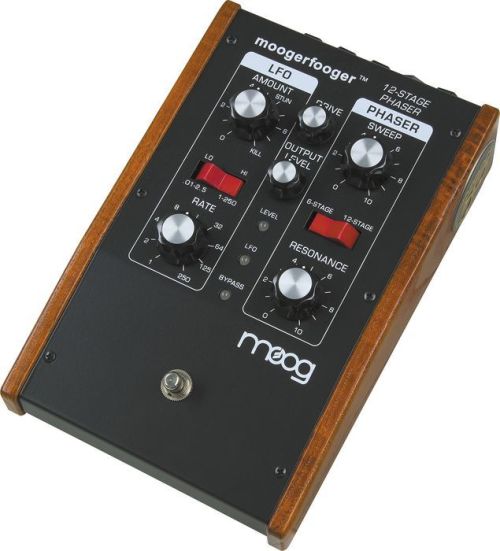
(Ah!! Even now, just the look of those Moog effects…tonal loveliness…)
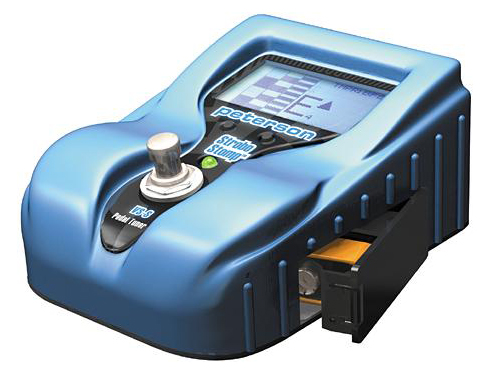
(Definitely not as cool…although, they definitely tried with the quite obviously air-brushed and maybe even computer-generated photo. But wow……the difference being in tune makes in your music. Yikes. That should be so obvious…and I’m sometimes the biggest offender. Isn’t it sad that we even have to say that?)
Secret #5: Get Your Guitar Set Up Properly
This goes right along with tuning. Getting your guitar set up will help it hold its tune, as well as making it more fun and relaxing for you to play it. Any decent luthier can do this; and you can do it yourself with a bit of practice and research. The short of it, is that it takes an allen wrench to either tighten or loosen the screw in the truss rod right by your tuners (usually under the name-piece thing) to get your neck the proper bow. The neck on most guitars needs a slight curve; not straight, as is the rumour sometimes. But too bowed, and it’s no good either. Basic rule of thumb is that if you hold any string down (most specifically the low and high E) in the first and the twelfth fret, you should just be able to see daylight between the string and the metal fretbar on the sixth fret. And then you take a normal screwdriver and move the saddle pieces for each string forward or backward until your tuner reads perfectly on each string open, and on each string held down at the octave in the twelfth fret. And as for action, lower your entire saddle (and even the individual ones, if your guitar is made that way) to taste. Usually the lower it is, the faster your neck will be. But the higher it is, the more sustain you’ll have. So somewhere in between…it’s different for everyone.
Usually, I’ll set the truss-rod to where it needs to be first. You should never set your truss rod by how you want your action; but, you’ll find that with most decent guitars, once the truss rod is set where it needs to be, the action will be pretty close to perfect as a result. So then secondly, I set the action. Then lastly, I use the saddle pieces to do the intonation.
You should check this at least every six months. And please, please, please note this!!! What I have just said is a rough gloss-over of the process of setting up and intonating your guitar. If you’re not comfortable with it, definitely have someone show you, or do some more research. You can damage your instrument. For instance, a quarter of a turn on the truss rod screw is a huge adjustment!! There is definitely the risk of cracking your neck if you do this wrong. I remember the first time I did this by myself…I was literally praying as I turned the allen wrench. hehe So please, don’t break your guitar! Take it to a luthier and watch them do it, if you’re not completely comfortable with doing it yourself.
And lastly, this seems like common sense, but if you want your intonation and tuning and action and all that stuff to hold, take care of your instrument. Never leave it in the car, never leave it in a building overnight that is not climate-controlled. If you’re playing an outdoor gig, keep it in the case when you’re not playing it. Little things, but this way you’re not intonating it every week, and putting wear on the wood and all that stuff.
Secret #6: Strap Screws
Yep. You know those screws in either end of your guitar’s body that you hang your strap on? This is huge. You gotta make sure that they’re of high quality metal…something toneful, like titanium; or better yet (I know it’s expensive), but actual diamonds. This makes a huge resonance difference…………
…………I’m just kidding.
So as we move on to talk about a bunch of different styles of guitars (all of which we of course need ;) ), and high-priced boutique pickups, make sure you try all this stuff first before embarking on the admittedly joyous experience of buying new gear. Man, I seriously love gear.
Splendid.
Karl.
 Guitar for Worship